Customs Continues Nationwide Sensitisation on Green Tax Ahead of July 1 Implementation

Author: Ibe Wada.
The Nigeria Customs Service (NCS) has continued its nationwide sensitisation campaign on the implementation of the Green Tax Surcharge and related fiscal adjustments ahead of its commencement on July 1, 2026. The initiative aims to promote environmental sustainability, reduce carbon emissions, and encourage the importation of cleaner vehicles into the country, in line with global environmental standards.

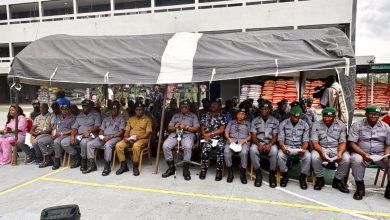
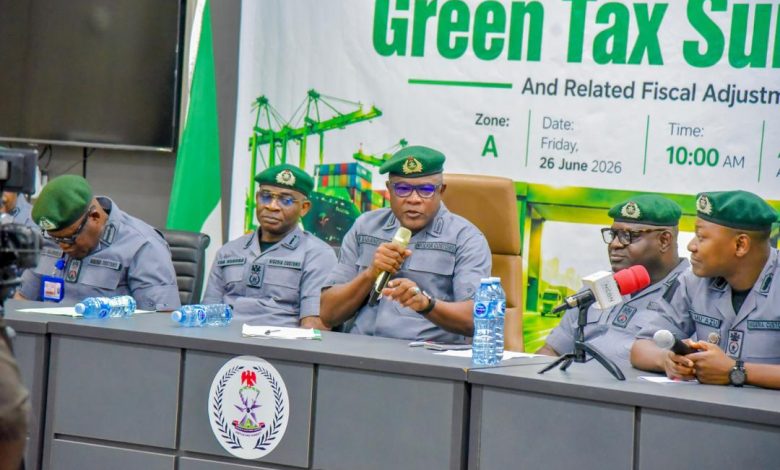
The sensitisation programme, held at Apapa Area Command on Friday, 26 June 2026, brought together Customs officers, licensed customs agents, freight forwarders, importers and other key stakeholders under the theme, “Implementation of the Green Tax Surcharge and Related Fiscal Adjustments.”
Representing the Comptroller-General of Customs, Adewale Adeniyi, the Zonal Coordinator for Zone A, Mohammed Babadende, noted that the sensitisation exercise is intended to provide stakeholders with adequate information before the policy takes effect.

“This sensitisation is designed to ensure that every stakeholder clearly understands the policy before implementation. Our objective is to eliminate uncertainty, promote voluntary compliance and guarantee uniform application of the Green Tax Surcharge across all commands,” he said.
In a technical presentation, the Comptroller in charge of Tariff, System Audit and Coordination, Murtala Muazu, explained that the Green Tax Surcharge differs from conventional fiscal measures and would therefore require a distinct assessment process. He noted that the Service has introduced a simplified implementation mechanism through the HS Code declaration platform.
He further disclosed that the Federal Government had simultaneously reduced import levies on vehicles from 20 percent to 10 percent, while duties on used vehicles have been cut from 15 percent to five percent to cushion the impact of the environmental surcharge.

Area Controllers present urged importers, licensed customs agents and members of the public to support the initiative. They noted that the reduction in import levies would ease the cost of doing business, facilitate legitimate trade and ultimately reduce transportation costs across the country.
Stakeholders at the event welcomed the initiative but called for sustained public awareness campaigns to ensure broader understanding and compliance as the rollout date approaches.